Granite City, IL is a steel town. It was founded in 1896 by brothers operating a steel-making company in St Louis who sought to expand their business and focus on an enamel process whereby utensils made of steel could be made to look like granite (hence the name). St Louis blocked the expansion, so they moved across the river, where they could also avoid paying cross-river taxes on coal.
Situated on the Mississippi, about six miles north of East St Louis, Granite City maintains a population of around 30,000. But unlike ESL, Granite City seems to be focusing on restoration of it's crumbing downtown. According to their website, there are efforts underway to repave streets and install street trees to the urban core. This is a good first step into the beautification and eventual rehabilitation and preservation of the downtown.
Here are some Google Earth images:
This overhead shot shows the dominance of industry in the city. Presently, industry is still active but closures of these plants would surely have a devastating effect on the community.
The boarded up remnants of downtown.
A fence here at least tries to hide the vacant lot behind.
An expansive row of boarded up commercial storefronts. It's not hard to imagine how this block would look with the addition of street trees, minor facade upgrades and thriving businesses.
The International Style Steel Works Building looms over this commercial strip, out of character with the surrounding architecture.
This facade could use a face-lift...
Ruins stand amongst the possibilities. A concerted effort needs to be taken to prevent this fate from happening to the surrounding storefronts.
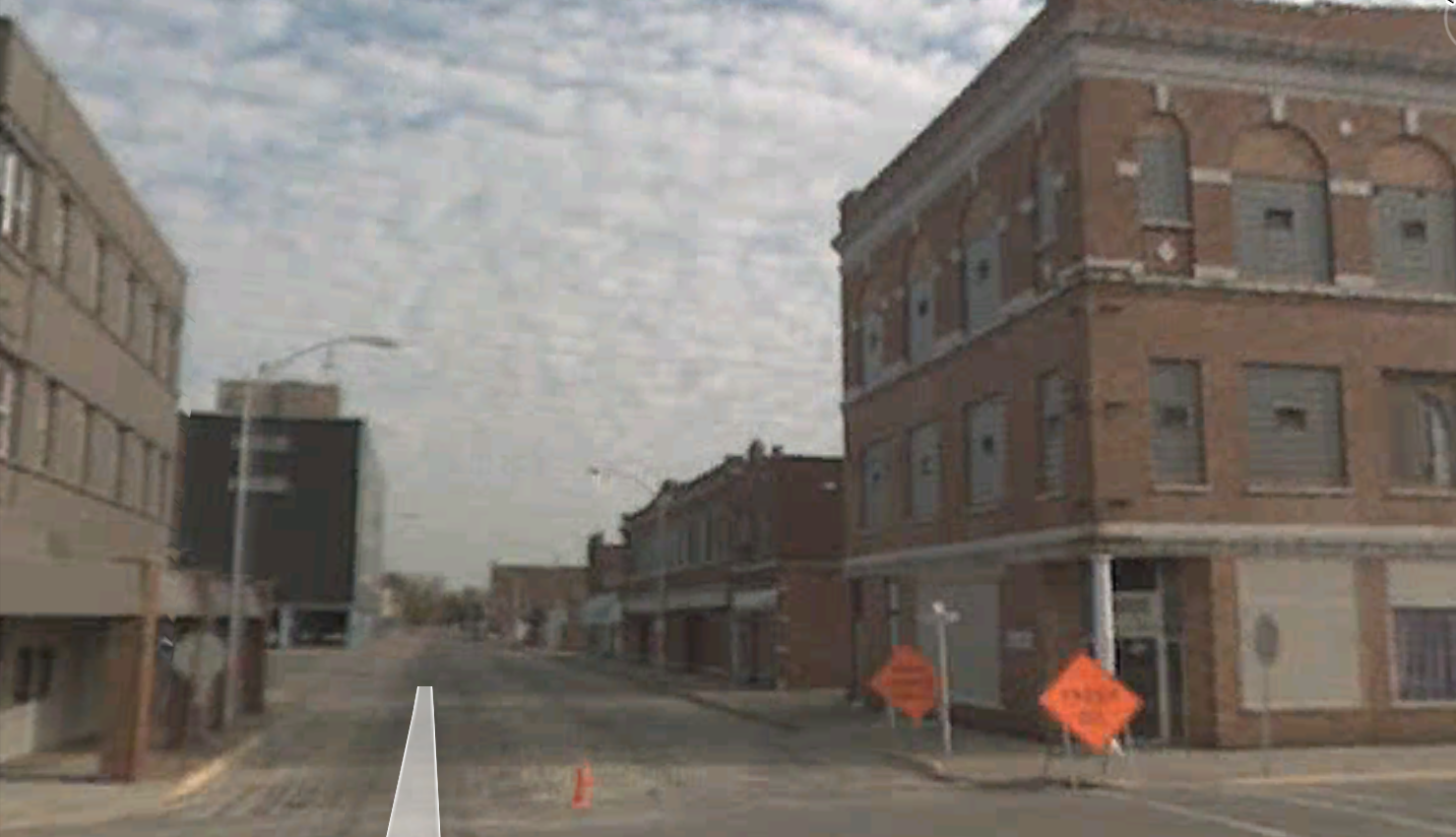
I presume this street is closed for paving, the first step in a revival of this commercial center.
About the Project
- Bones of Downtown
- Portland, OR, United States
- We are embarking on a project to document historical downtowns in America before they crumble. Many downtowns in former industrial towns and cities, such as Detroit, St. Louis, and Camden, NJ used to be booming industrial towns. Now storefronts stand abandoned and rotting, no one walks around and there are few cultural activities. We plan on photodocumenting large and small declining cities and towns alike, mostly in the Rust Belt and Texas. We are also interested in finding solutions that revitalize and restore these crumbling downtowns.
Showing posts with label historical preservation. Show all posts
Saturday, June 4, 2011
Monday, May 30, 2011
Oil City
Despite losing over half its population between 1940 and today, Oil City has managed to maintain a viable main street. Special emphasis has been placed on preservation of victorian structures and retaining its history.
I chose to profile this city to show that economic decline (especially within Rust Belt cities) does not have to signal the death of a city. Oil City has focused on promoting itself as a tourist destination, focusing on its heritage sights, historic city center and natural surroundings.
With a present population of 10,500, Oil City seems like a much larger place. The density of downtown buildings, destination points within the city center, and a quality walking environment make Oil City a vibrant and exciting place. It should serve as an example to other Rust Belt cities as they chart the course of their future.
I chose to profile this city to show that economic decline (especially within Rust Belt cities) does not have to signal the death of a city. Oil City has focused on promoting itself as a tourist destination, focusing on its heritage sights, historic city center and natural surroundings.
With a present population of 10,500, Oil City seems like a much larger place. The density of downtown buildings, destination points within the city center, and a quality walking environment make Oil City a vibrant and exciting place. It should serve as an example to other Rust Belt cities as they chart the course of their future.
Sunday, May 29, 2011
Cairo
Cairo, Illinois.
Located at the confluence of the Mississippi and Ohio Rivers, this city has seen a population decline from it's peak population of over 15,000 to its present population of 2800. The result of such population loss and the diminishing importance as a river city has led to abandonment of it's downtown area.
A tour through Google Streetview shows clearly the abandonment of the city's buildings. Cobbled streets and ornate architecture provide a glimpse into what must have been a thriving town. Interestingly, some buildings seemed to have collapsed, the rubble left in place. Perhaps the city doesn't have the resources to clear the fallen bricks and mortar.
Here are some images from Google. I'm looking forward to exploring this forgotten downtown up close, hopefully gathering some information and photographs of the city as it once was.
The Gates of the City. Fortunately, several blocks of Downtown Cairo are listed on the NRHP.
The GEM theatre. Status unknown. Old theatres are, however, fascinating.
Modern ghost town
Rubble spills out into the streets.
Interesting architecture.
Subscribe to:
Posts (Atom)


